May is the most difficult month to decide what goes in our boxes. It sits right in the middle of the ‘hungry gap’ we spoke about last time and though there are signs of light at the end of the (poly)tunnel, like the tiny peaches forming on our trees, initial treats like wild garlic are fading and we haven’t made it through just yet.
We put an enormous amount of thought into making sure the contents of each of our boxes, whether small, medium, large or even extra large, are exciting and varied every week, whilst prioritising local sources and remaining practical. We want you to feel inspired all year round, not ever to be left scratching your head, as if you’re the unwilling participant in a particularly torturous Ready Steady Cook episode. We know deciding what to cook is often far more arduous than actually cooking it, and whilst endless possibilities can be overwhelming and limitations can foster creativity, we aim to cause celebration not boredom. If you’re anything like us, knowing we have a delicious lunch of leftovers later, or looking forward to cooking a seasonal family favourite for dinner, is a real mood booster that propels us through spells of stress or glumness. (Remember to make use of our swaps system and ‘dislike’ function to get the most of what we offer!)
Filling the boxes to please palate, climate and budget isn’t so easy when there aren’t four varieties of cabbage or multiple root vegetables to alternate between anymore. Transitioning away from the comforting, starchy meals of winter into fresher recipes can take some getting used to too, but we’re enjoying reacquainting ourselves with risottos, grainy salads and smart looking tarts.
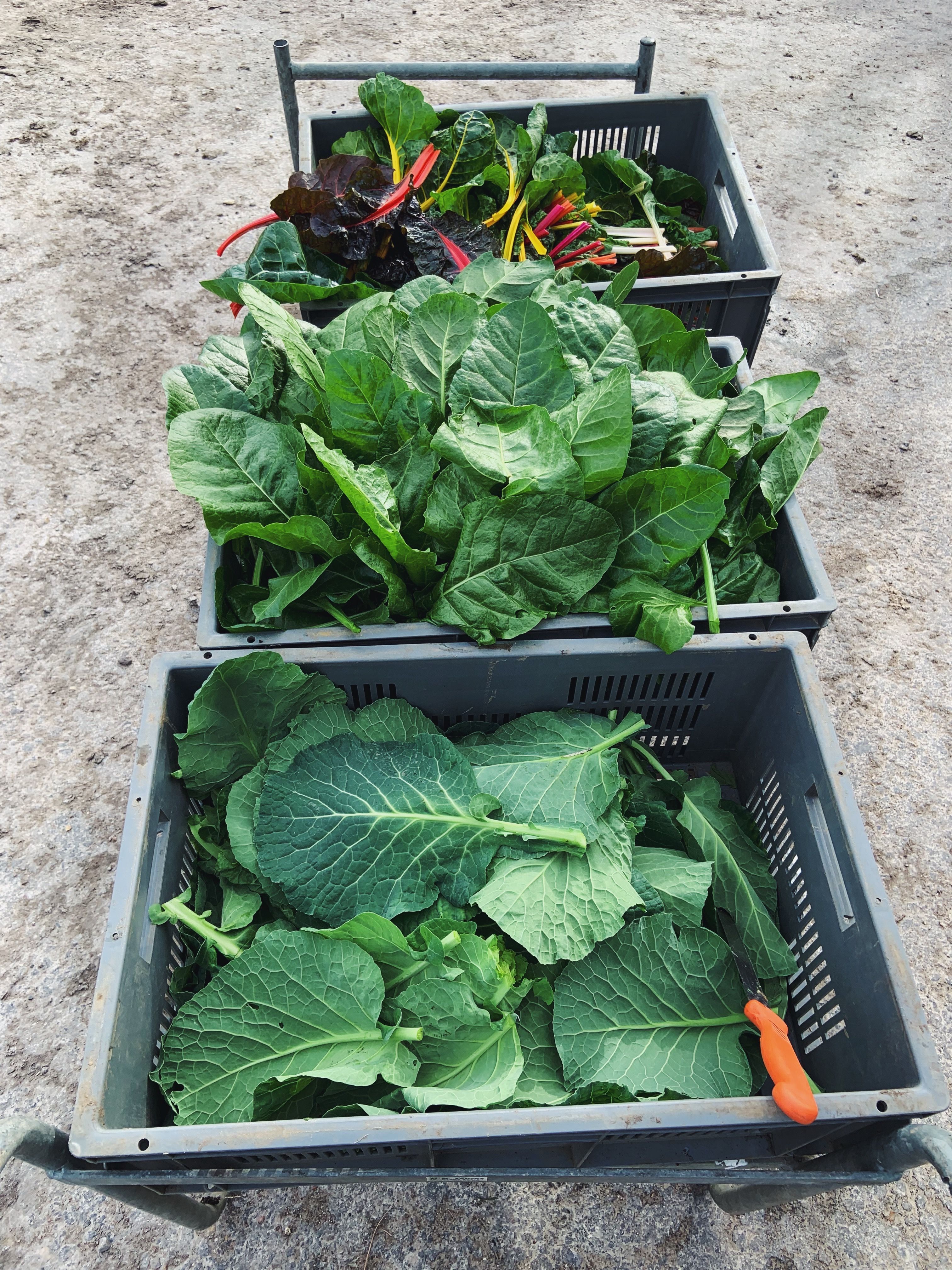
Thankfully, our leafy greens are culinary buoyancy aids keeping us afloat and while the chard and spinach that survived punishing frosts are now finally giving their goodness back to our soil, rather than our customers, their replacements are thriving under the previously grimy glasshouses we scrubbed clean with vinegar.
In the salad mix you’ll start spotting the new lettuces we chose from seed catalogues what seems like eons ago as well as pops of pink from amaranth.
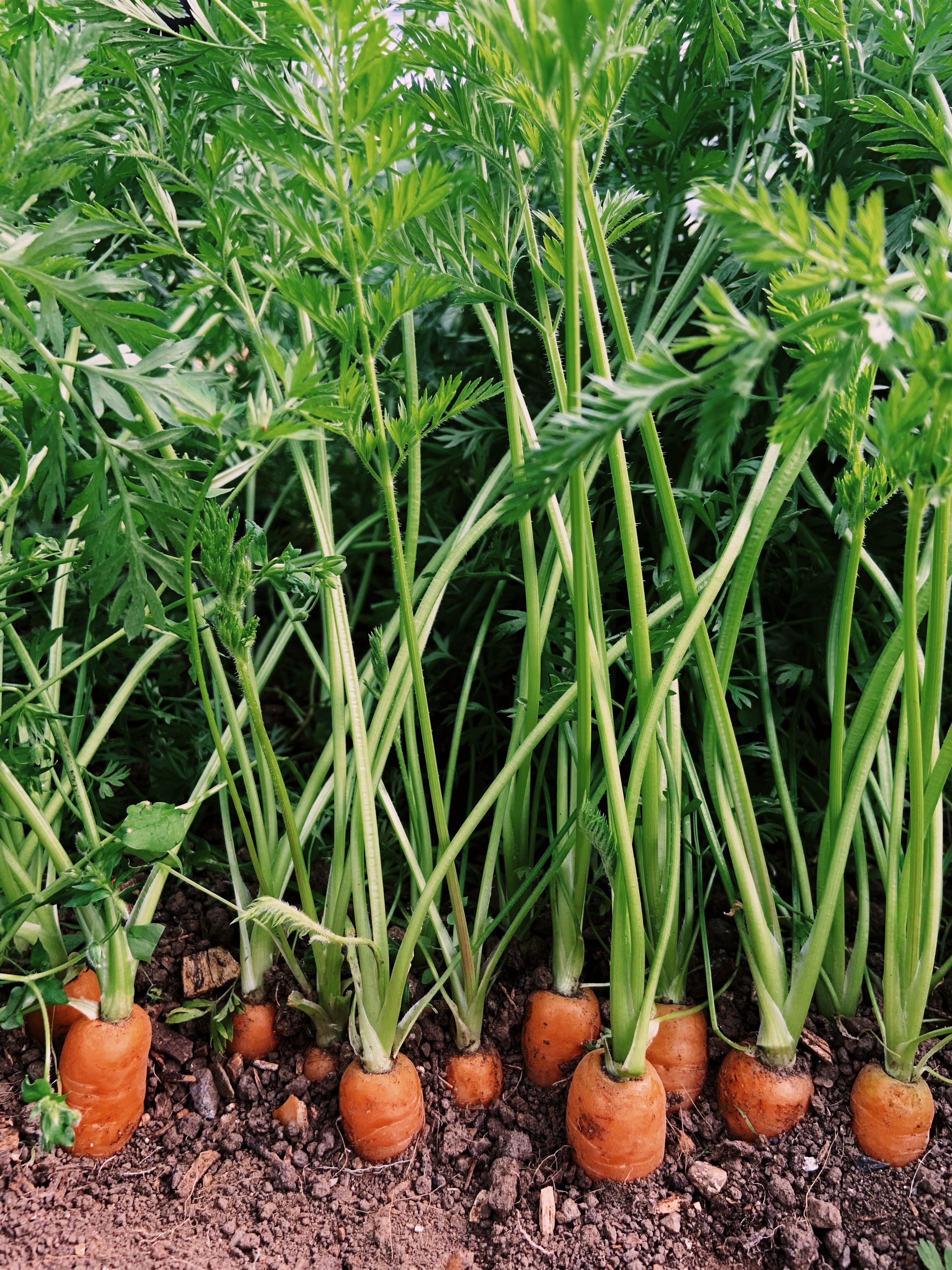
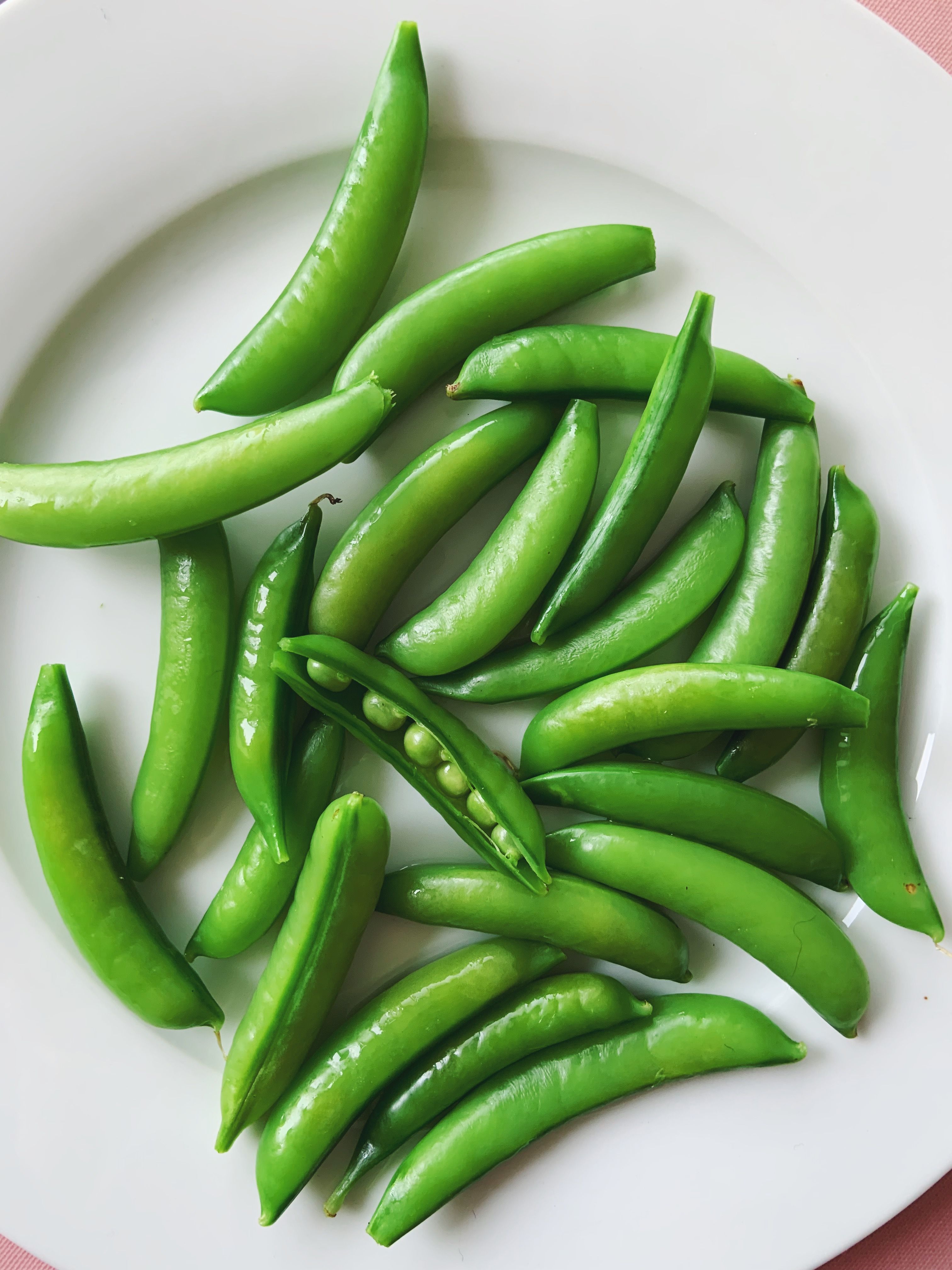
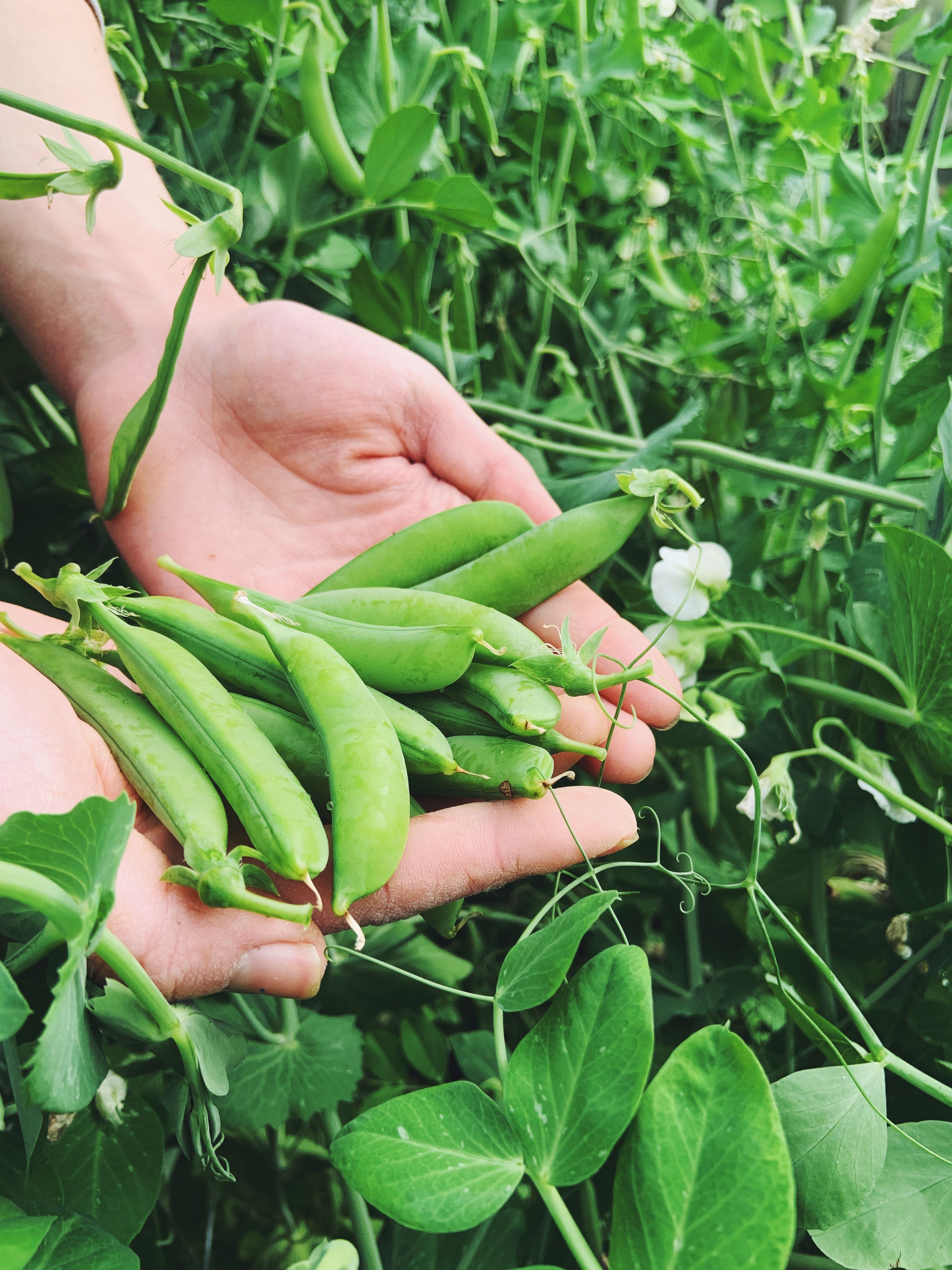
Replacing wild garlic and green garlic are the first punnets of sugar snap peas which deserve a fanfare, and the sweet, sweet new season carrots which warrant a red carpet. At the sight of pods forming we got prematurely enthusiastic about the sugar snaps, but patience will be rewarded and what started as flat mange tout are now plumping up into such juicy treats we’re thinking about introducing an obligatory muzzle for whoever’s picking them to wear. (Just kidding, but they are even better after a brief steam or stir fry so worth not snacking on all of them raw!). As for the carrots, we direct-sowed these indoors back in November and January, keeping them under fleece and our watchful eye (those darn rabbits!). The satisfaction of pulling them out of the ground is the agricultural equivalent of striking gold and even if you get carrots in your root bag every single week these aren’t something to dismiss: taste one and you’ll understand they’re no run of the mill ingredient to bung in a casserole.
The next few weeks will see the petering out of our brief but beloved radish and salad turnips, (if you’ve been having them crudité style, try roasting them before they’re gone) but the first of our 2023 beetroot (with lush tops as a bonus 5-a-day portion). Spring onions will be back in full force too and we will have asparagus for a little longer. We’re overjoyed our original three beds are now producing generous amounts and hopefully if you’ve ordered a bundle you’ll agree, whilst it’s an extravagance, it’s so sumptuous it’s surely fit for the gods. As indulgences go it’s also completely sustainable and highly nutritious. If you tried to secure some and we had to disappoint you, we thought we’d provide some behind-the-scenes insight to prevent you from thinking we’re running some kind of cruel lottery…
From years of practice we’re able to say with relative accuracy how much we’ll be able to harvest from every square metre of cavolo nero or row of radish. Once you’ve got an eye for it you can survey a bed and convert it into 250g portions, or think in terms of bunches. We then use this information to set availability limits on orders for extras (which we announce via email on Saturdays) and to plan which box is a good fit for which crop, dependent on the popularity of each size. This is much harder with something like asparagus, which pokes up out of the ground all of a sudden and doesn’t always cooperate with our schedule, even if we ask it very nicely. We always harvest as close as possible to delivery days (Tuesday-Friday), never sending out pre-picked produce that doesn’t store well, and as of yet we haven’t found a way of persuading plants to hold off getting themselves ready until we actually need them. For example, over a sunny weekend the asparagus might push up a plethora of spears (great!) but, left unpicked, they keep growing up and up until they’re tough and inedible; intent on branching out, leafing up and channelling energy back into their roots (not so great for us). This means what we forecast is all wrong and supper plans get scuppered. We hate being unreliable and endeavour to strike a balance between allowing the maximum number of people to share our bounty and not making promises we can’t keep. As ever, farming is more of a collaboration than a matter of subjugation and there are lots of things beyond our lowly human control.
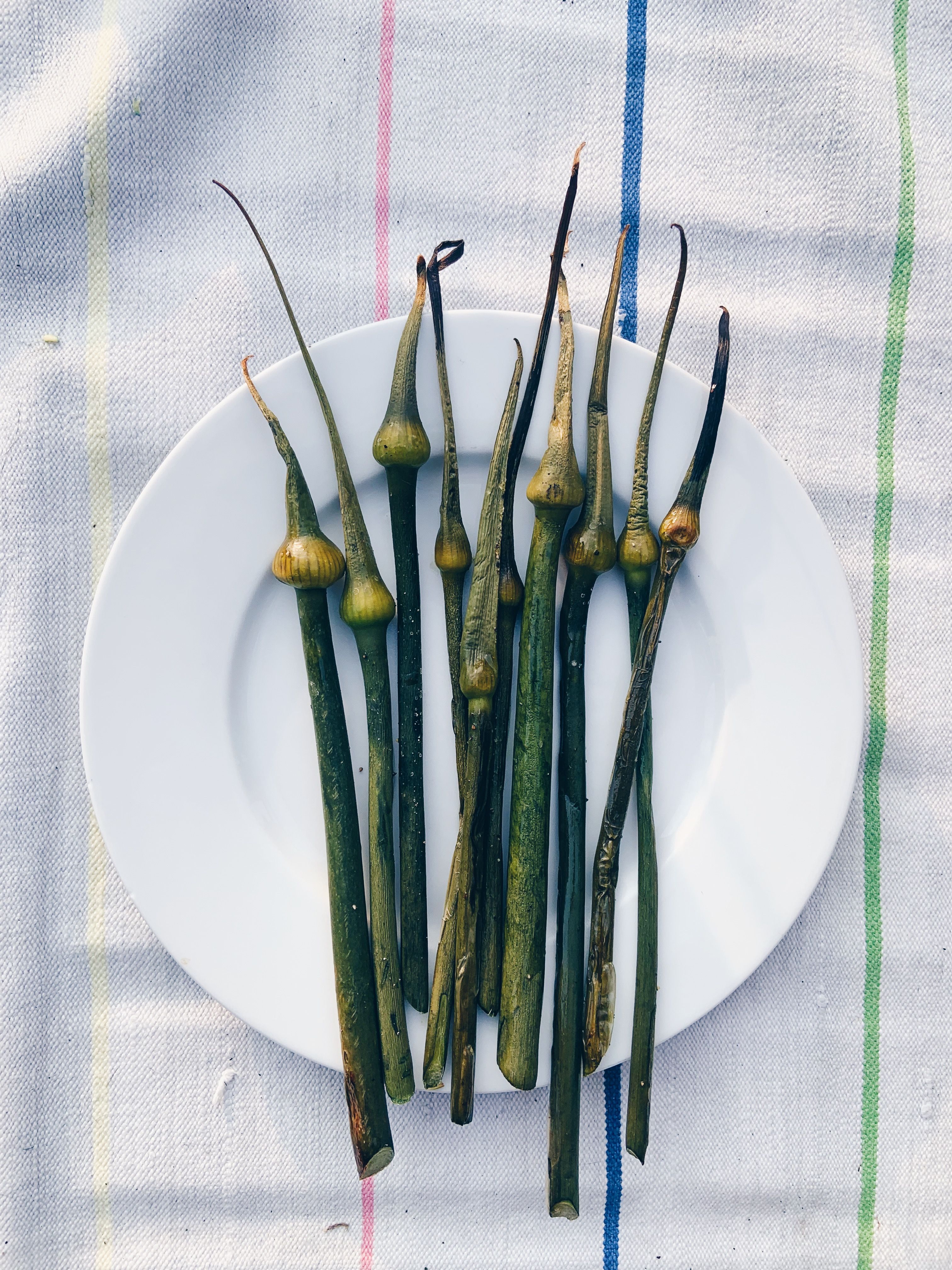
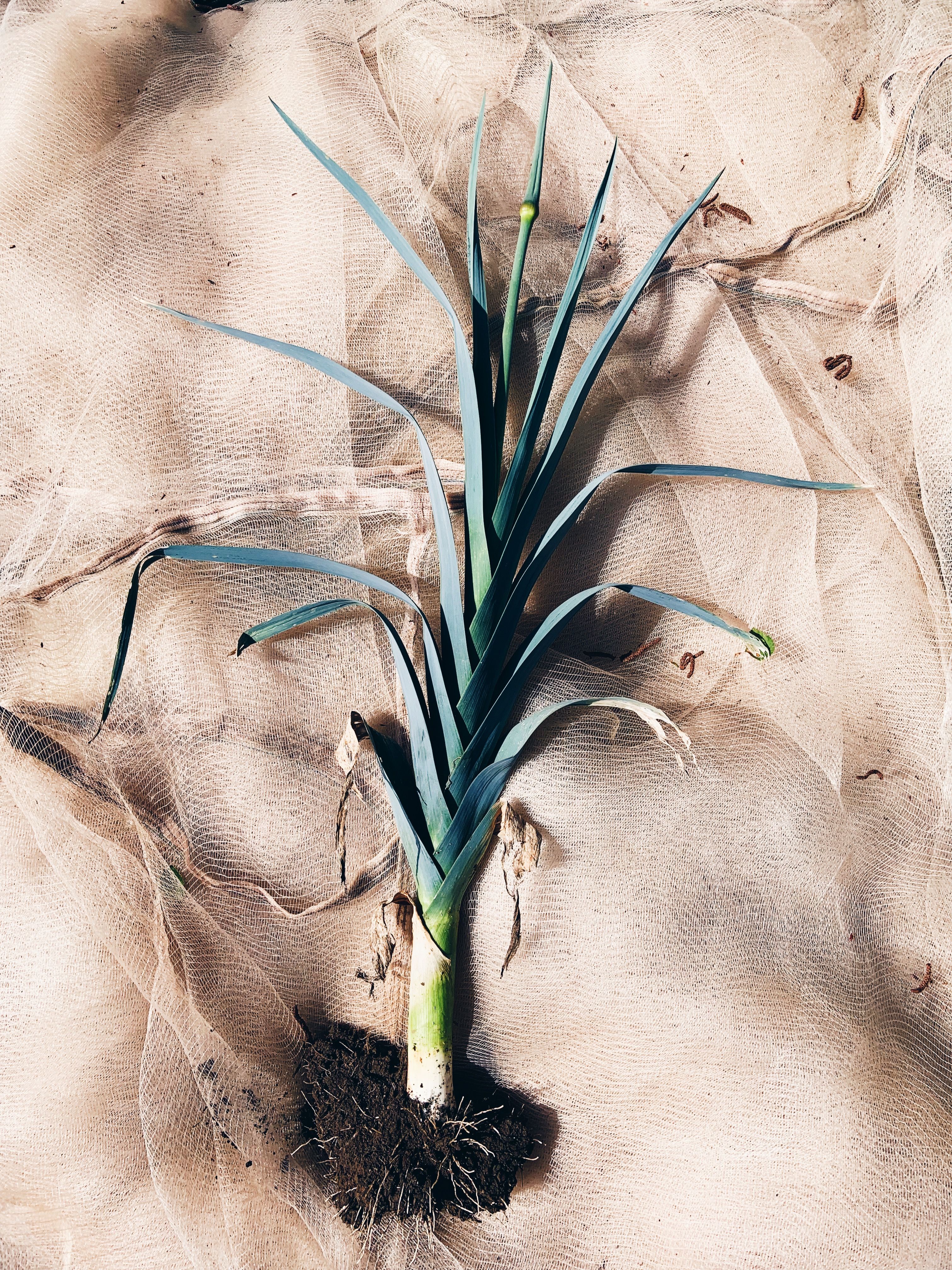
Our emblematic leeks are something that have been incredibly reliable though, lasting longer than we could have dreamed when we planted them last June, to the point of us wondering if they were somehow defying nature and dividing and multiplying overnight (this sounds ideal but we suppose eternally replenishing veg patches would mess up our all-important crop rotation!) We’ve now dug up most of the 40,000 before they’ve had a chance to bolt (which is excellent in terms of wastage) but this means the leek ‘scapes’ (the bolted part, a delicacy we mentioned in April) won’t be in plentiful supply. Scapes look a bit like the i360 observation tower on Brighton seafront and are what eventually open out to become the instantly recognisable purple allium flowers, like chives, or, for keen gardeners, ornamental onions. They’re great grilled and we’ll be popping a few portions in random boxes- let us know what you think if you’re one of the lucky recipients…
Finally, to end on a tantalising high, consulting our records and depending on weather conditions with fellow organic growers in Spain, apricots may premiere before the month is out! Oh stone fruit, how we’ve missed you!


© 2026 - Barcombe Nurseries
Powered by
