Can you believe we’re over half way through September already? Owing to the heatwave of the past few weeks it’s only just feeling appropriate to talk about Autumn produce, though.
At the beginning of the month we noticed dewy spider webs in the hedges, that inevitable nip in the air and that picking the tomatoes wasn’t taking us quite as long. The number of ripe toms on our traffic-light-like trusses directly correlates to the weather, so a reduction in yield was tangible evidence of cooler nights and waning light levels. (Forget degrees, this could be an alternative method to measure summer… “it was seventy crates hot!”). Like us, you might have considered the approaching necessity of making changes to your wardrobe or packed lunches. Ginger tea! Double socks! We were psyching ourselves up to embrace spooky/cosy/soupy season and ready to dig out the woollens when BAM, suddenly we were back in time (temperature wise at least) and reaching for the sun block and sun hats again.
Today, lots of trees are still lush and green, but if you look out of your window or take a walk up on The Downs you will see the first leaves really are turning red and gold now and while conversely, we’ll have red and gold tomatoes for some time yet before they stay green (and we badger Harry’s mum for her chutney recipe), the time has come to start weaning yourself off Mediterranean produce. Our sweet mini peppers and fiery chillies can keep producing edible baubles until we start putting a different kind of shiny decoration on branches (yes, we’re already thinking about Christmas and the annual collective urgency to secure adequate stock of sprouts and parsnips) but other crops like aubergine and cucumbers tend to screech to a halt, nosediving rather than petering out gradually.
Our sowing plan means there’s always something waiting in the wings though, fear not. As human beings, the urge to preserve abundance is in our bones, and whether drying, pickling, jam-making or freezing it is a wonderful thing to do, which you always thank yourself for later. However, eating in tune with the cycles of nature means there’s no need to fall victim to a scarcity mentality. Instead, it’s best to accept the shift and roll with it. Even parmigiana, panzanella or pesto pasta would get old if you had them every single day, and no way will we be craving anything chilled or raw when those adjectives are applicable to our extremities…
We’re excited to turn our attention to all the frost-hardy veggies that are raring to go. Since we planted them out earlier in the season they have been busy growing, happy for their fair-weather relations to take centre stage so that they were uninterrupted in their efforts to put down healthy roots and become bushy and plentiful (frilly edged curly kale and ocean hued cavolo nero), tree-trunky and mighty (leeks) or as hefty as bowling balls with perky, tufty tops (celeriac).
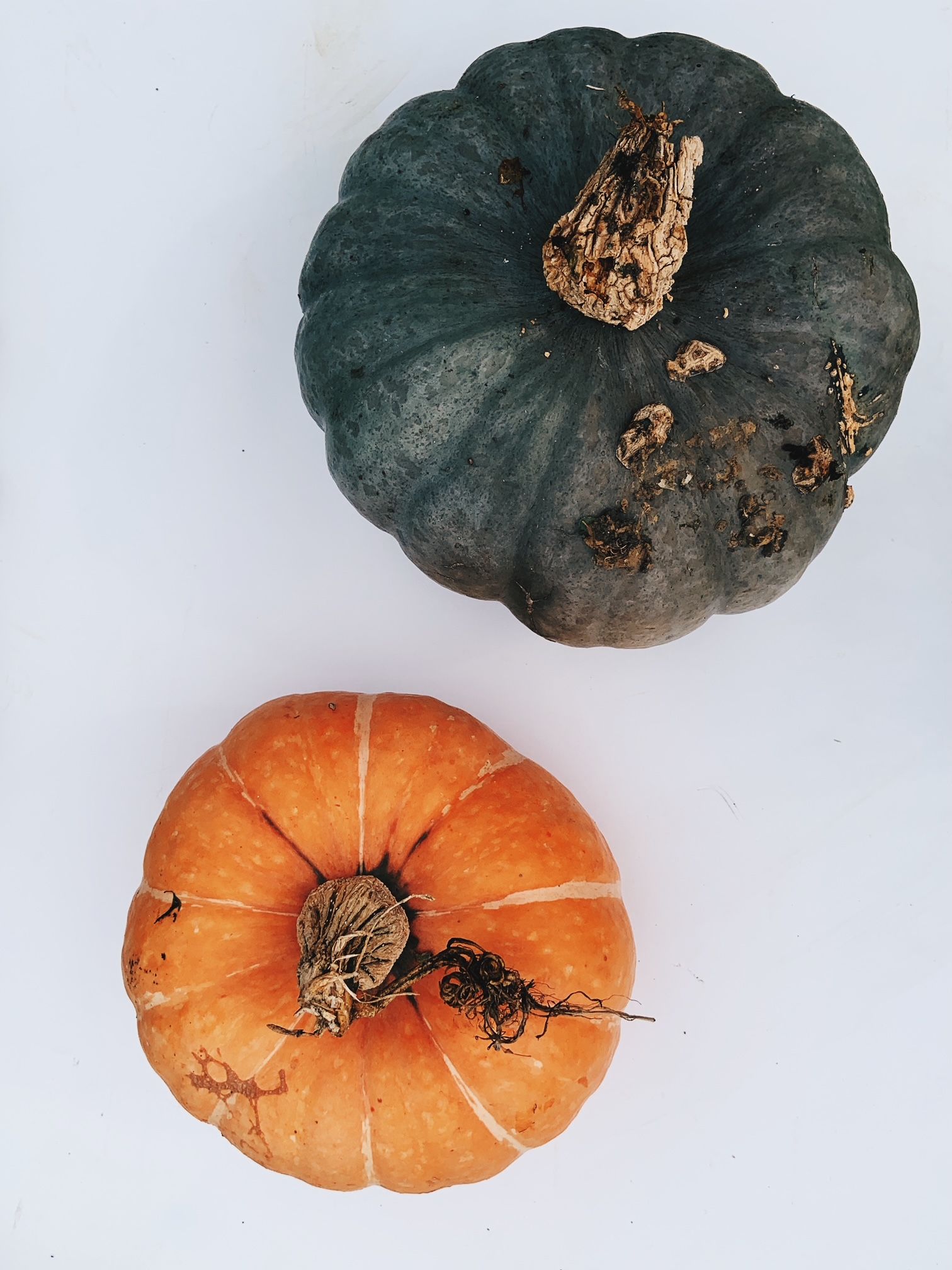
Weeded so that they’re not out-competed, but so that there’s no bare earth to take a battering from the elements either, they’re looking ready to withstand all that winter brings, when they’ll only be able to photosynthesise just enough to keep themselves ticking over, rather than to fuel heaps of new leaves. More than kale or celeriac, squash is what immediately comes to mind when we think of this time of year, and we’ve started safely stowing ours away in the Barcombe equivalent of cellars or caves chockablock with fine wines, cheeses and salamis. When the squash vines start dying back and the squash themselves become more visible we cut them off and leave them to bask in the sunshine, curing so they keep until spring, improving over time like the aforementioned delicacies. This time around, the harvesting process was quite a game of hide and seek as we ‘under-sowed’ the plants with a green manure mix (which will remain in the patch, feeding the soil) and it did so well it camouflaged what we were hunting for. Instead of ‘needle in a haystack’, this was ‘kabocha in the clover’.
We chose seven different squash varieties for 2023 and thought, with them soon premiering in boxes, we would provide a guide to the attributes of each and how they are best deployed.
Most of you will be well-acquainted with butternuts, but we’re aware other kinds of squash aren’t readily available and for the uninitiated this might be a bit daunting. Being able to provide ingredients you can’t acquire in supermarkets is one of the things we’re most proud of, so we’re keen to get everyone enjoying them. If you like butternuts then you’ve really got a treat in store- it’s the equivalent of only ever having tried Galas, not Russets or Bramleys, and if squash is currently on your ‘dislikes’ list we’d encourage you to reconsider: it’s one of our favourite things ever, almost as substantial as potato and far more interesting and more versatile. They are the secret to making autumn and winter meals luxurious, filling and full of flavour. If you love carrots and beetroot but are put off by the lumpen or arguably ‘ugly’ appearance, or by an absence of recipes, let us change your mind. Pumpkin and their kin are NOT just for halloween!
Delicata
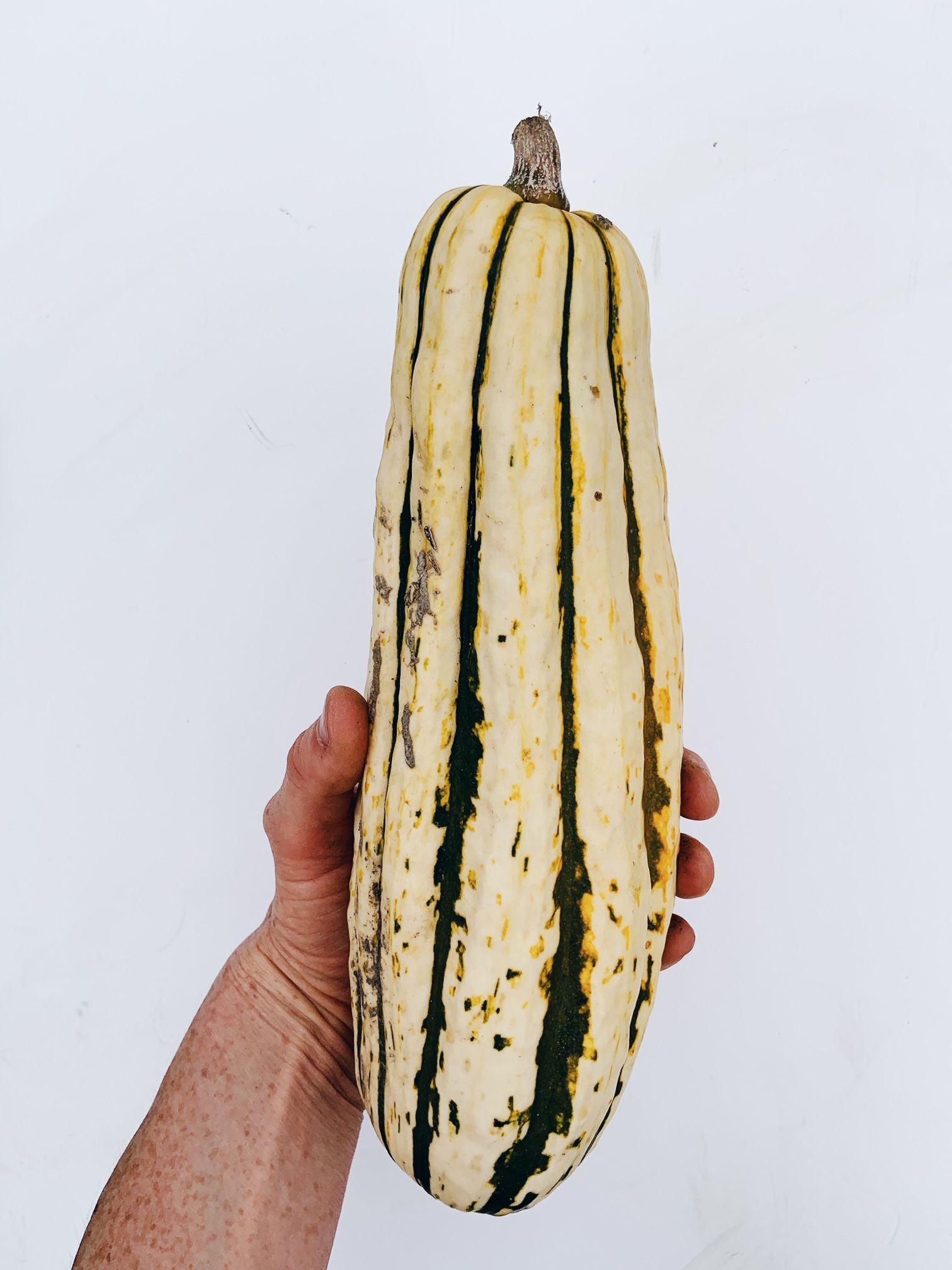
Custard coloured and striped, conjuring images of circus tents, deck chairs or jesters, these are what you might call a ‘beginners’ squash. They are the gentlest in flavour and the easiest to prepare. You can cut them lengthways and easily scrape out the seeds in a trice, then slice into scallop-rimmed half moons and roast as a lovely accompaniment to any meal you regularly prepare. If you chop them super thin they become candied and crisp- how about a bowlful as an aperitif nibble? Their prettiness and mildness mean it’s a shame to blend or mash them but they are an excellent candidate for stuffing- load up the ‘boat’ hollows with herby lentil/nut/mince mixes!
Buttercup
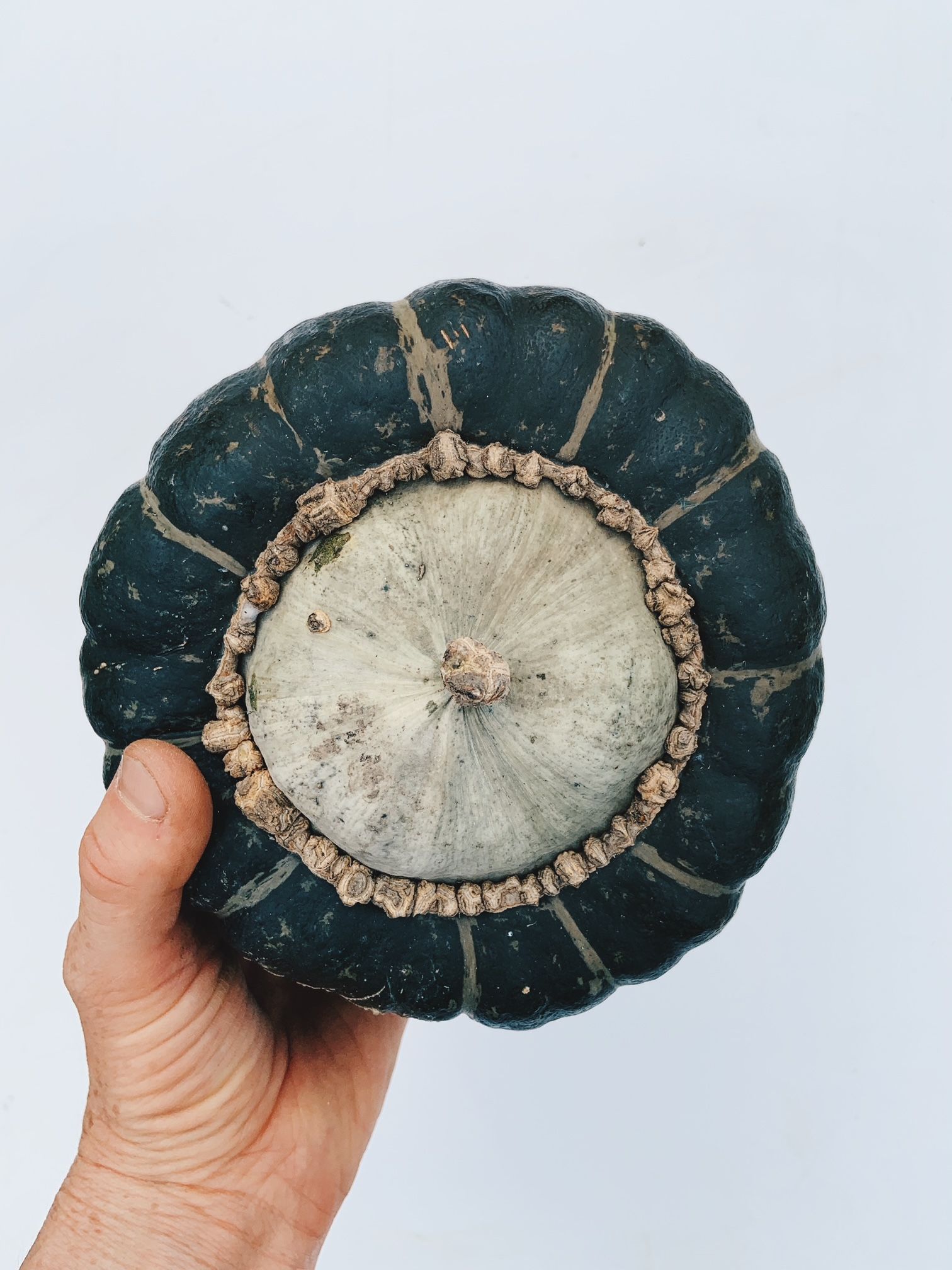
Next up is this relative of the Turban squash, which instead of having a ‘hat’ on top has a ’button’ on the bottom. They are squat and almost triangular and their flesh is… buttery! Succulent, sweet and mellow but with a bit more oomph than a Delicata, they are delicious transformed into soups or sauces (pre-roast before combining with sautéed garlic and onion, then liquifying with stock). This version of a macaroni cheese is a must-try. Their dark skins are thin and soft so no need to peel if enjoying them chunked for something like this fuss-free yet restaurant worthy one tray wonder (add a block of tofu to turn into a full meal) or in a curry/tagine. If you’re bothered about the skin affecting the shade of your dinner, don’t chuck it, bung offcuts in the oven with smoked paprika, olive oil and salt as a gourmet, healthy alternative to any snack that comes in a packet.
Uchiki kuri
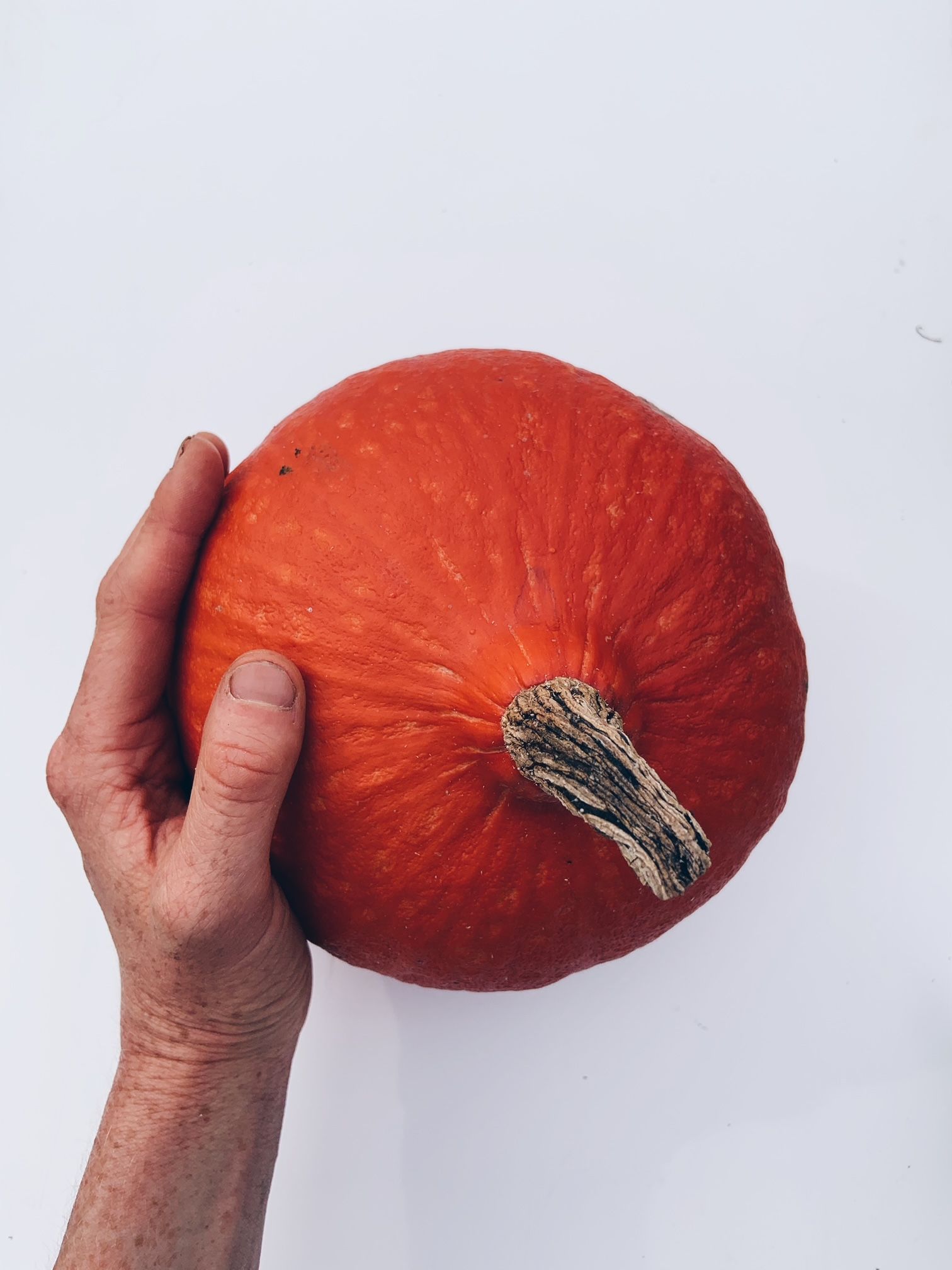
Also known as red onion squash owing to their round shape and glowing-coal colour, these are even deeper in flavour than Buttercups whilst still being moist and very suitable for pies/cakes/puddings as well as savoury dishes. ‘Kuri’ is the Japanese word for chestnut and whilst these are nutty, they’re smoother and more fruity than Kabocha (more on them in a mo). Their intensity means they fare well in bakes like this one but anywhere you have ever used squash (perhaps a risotto?) they will shine. Uchiki kuris are the melt-in-the-mouth, mid-ground, crowd-pleaser of our squashes and we don’t want to even imagine an autumn without them. Again, no peeler required.
Kabocha
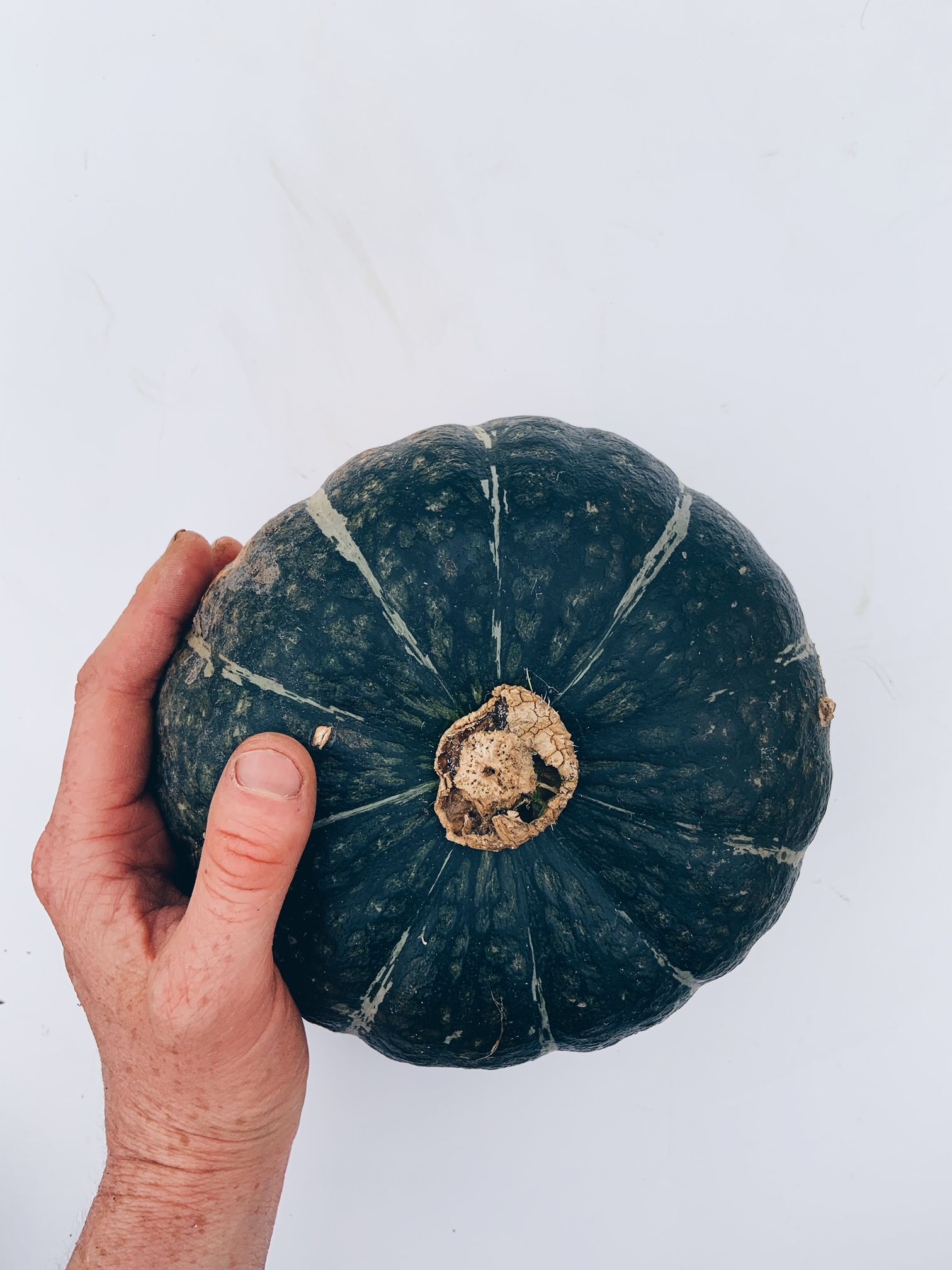
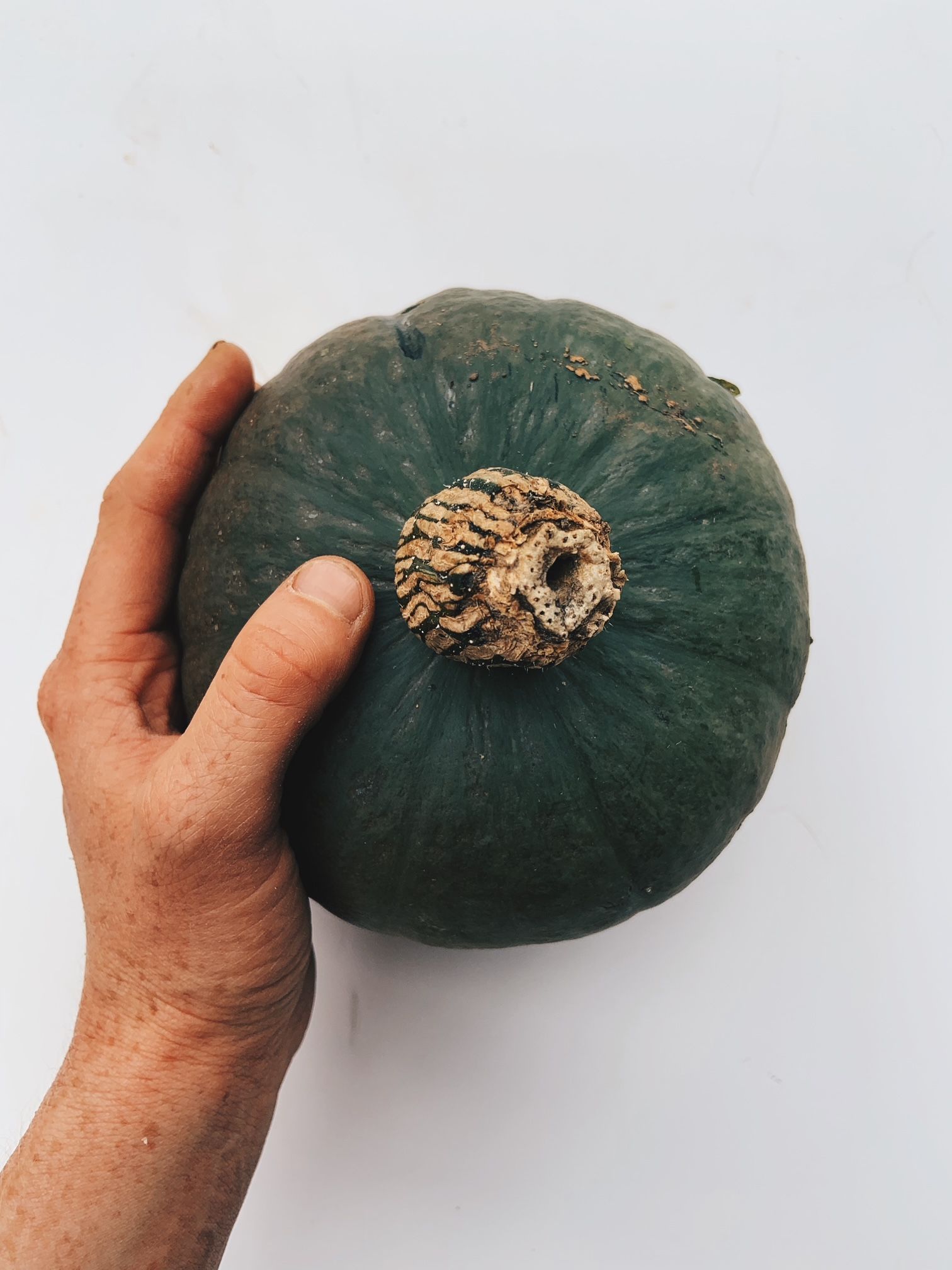
Otherwise referred to as green hokkaidos (‘kabocha’ is the Japanese word for squash and Hokkaido is Japan's second largest island) these are perhaps the richest tasting of squash, with the most satisfyingly dense flesh. Ooof, they are gooood! Earthy, yet caramelly, Kabocha are just incredible whether in a laksa, smushed onto pizza (our most popular topping at the last open day) or used in this vegetarian centrepiece that is almost 100% guaranteed to make even the most committed meat-eater jealous (have you noticed we’re shamelessly devoted to Anna Jones?) Trust us, you’ll want to order a few and have them up your sleeves for special occasions (not literally up your sleeves, that would be uncomfortable).
Blue kuri
Ok, we spoke too soon, these are the densest, earthiest of all! with a dryish/floury flesh that will apparently become waxier over time but that is by no means a disadvantage. Rather, it makes us want to experiment with Asian style recipes like slow-simmering it in broth, turning it into korokke (like croquettes) or dango (sweet dumplings). We’re really looking forward to getting creative with these. Our Blue Kuris are the only squash you’ll probably need to peel as their dusky, pebble toned skin with peachy patches is a little tougher than the others. This needn’t be a hassle though: a neat trick to save time, effort, and nicked fingers is roasting in quarters then simply scooping out of the shells. Remember the seeds can be toasted too for a tasty and thrifty topping.
Desert Spirit
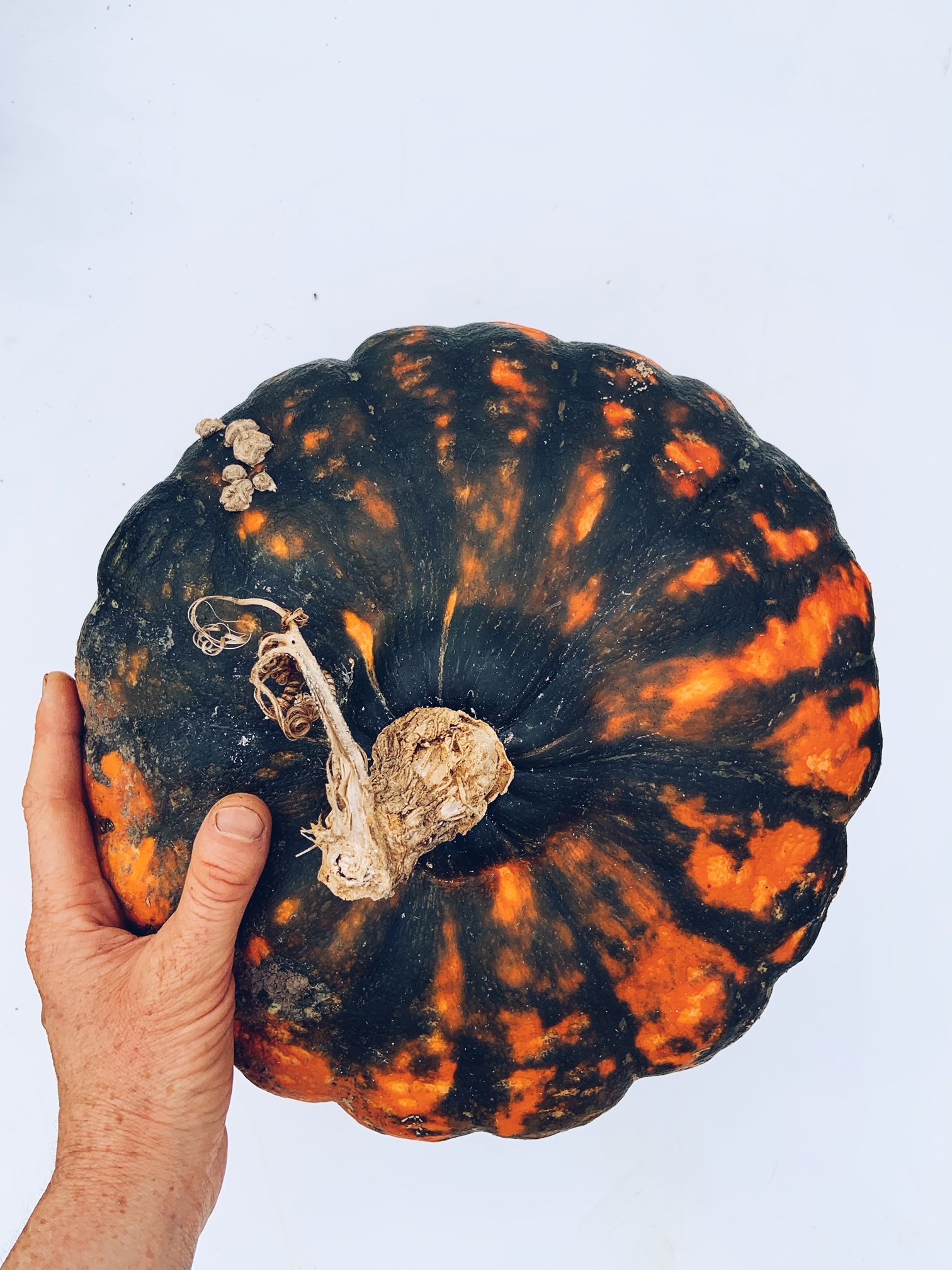
Our sixth variety is called Desert Spirit and is a ‘landrace’, this is a locally adapted kind that has developed over time, through adaptation to its natural and cultural environment. Bred and created by Wild Mountain Seeds in the USA and distributed by the innovative Vital Seeds, the Desert Spirit has many squashes in its heritage, including Buttercup and the Oregon Homestead Sweet Meat. This explains why the ones we’ve sampled so far did taste like Buttercups crossed with something more vegetal/courgettey. There’s such a diversity in the crop, from ghostly pale whoppers to warty, almost fluorescent, beauties and pint sized poppets that look like volcanic rock splattered in lava- we’re curious how the texture and taste will vary though. We’ll keep you posted! (Owing to such a range in sizes and colours we’re scratching our heads as to how to share these without listing every specimen as a one-of-a-kind piece!).
Baby bear
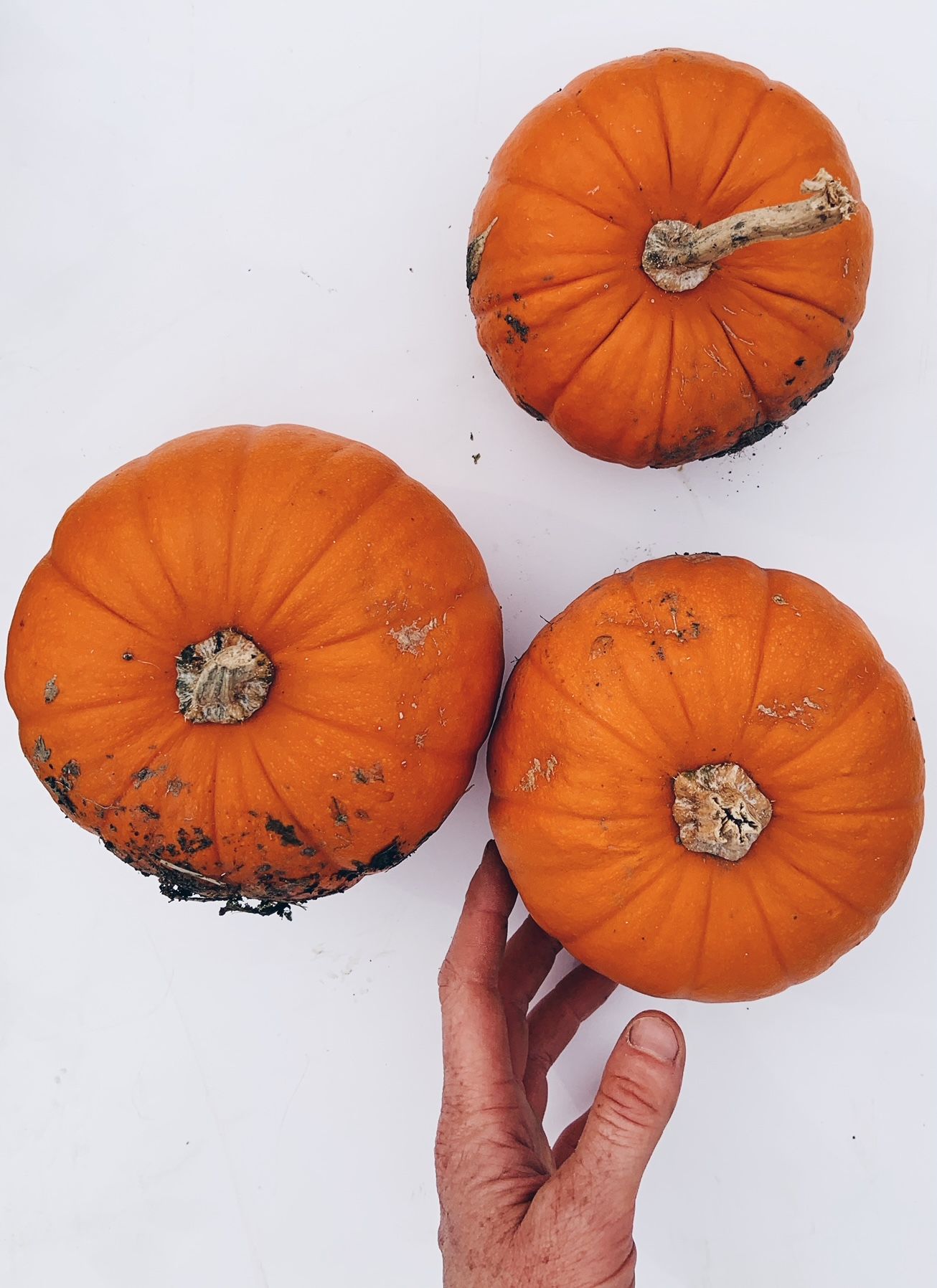
These cuties don’t get watery or wooly like their gargantuan cousins and are still great fun to carve into ghoulish lanterns, without generating any waste. We might save these for a farm event or flashmob on-street promotion but if you’ve got a brood of trick-or-treat-hungry offspring in tow we can put some aside.
As well as these seven we will be sourcing the best Butternuts you’ve ever tried along with Crown Prince from our friend Metske at Bore Place. Having somewhat bad-mouthed Butternuts we will say with their solid ‘neck’ they have an impressive flesh to seed ratio and it’s obviously thanks to their versatility and reliability that they’ve become so commonplace. On the squash scale we’d probably put them between Delicata and Buttercup.
Crown Princess are the ones with pale blueish-grey skins that can get so enormous we often carve them up and send them out in more manageable portions. They store incredibly well, like a connoisseur’s vintage treasure: in fact, some of us don’t think you should even consider eating them until January, when they’ve had time to mature and we’ve worked our way through all the other varieties.
In September we’d place them at the light end of the squash spectrum but by the new year they’re closer Uchiki Kuri in depth and when you’ve tried one in its prime, tender and honeyish, you’ll probably want to make room in your airing cupboard to hoard a few.
We hope this has whetted your appetite for much feasting ahead and would love to hear your tried and tested squashy concoctions!


© 2026 - Barcombe Nurseries
Powered by
