What & How We Grow
Hello!
In a culture of misleading ‘green-washing’ we want to be completely transparent about where everything in your box comes from, and to explain how we grow the produce that we do grow ourselves and why we don't grow what we don't!
As awareness and subsequent concern increases surrounding agricultural practices and supply chains, we hope you find the below information interesting, as well as reassuring, and we welcome any questions you might have. There’s a lot to get stuck into so we’ve split it up into four sections;
Our soil
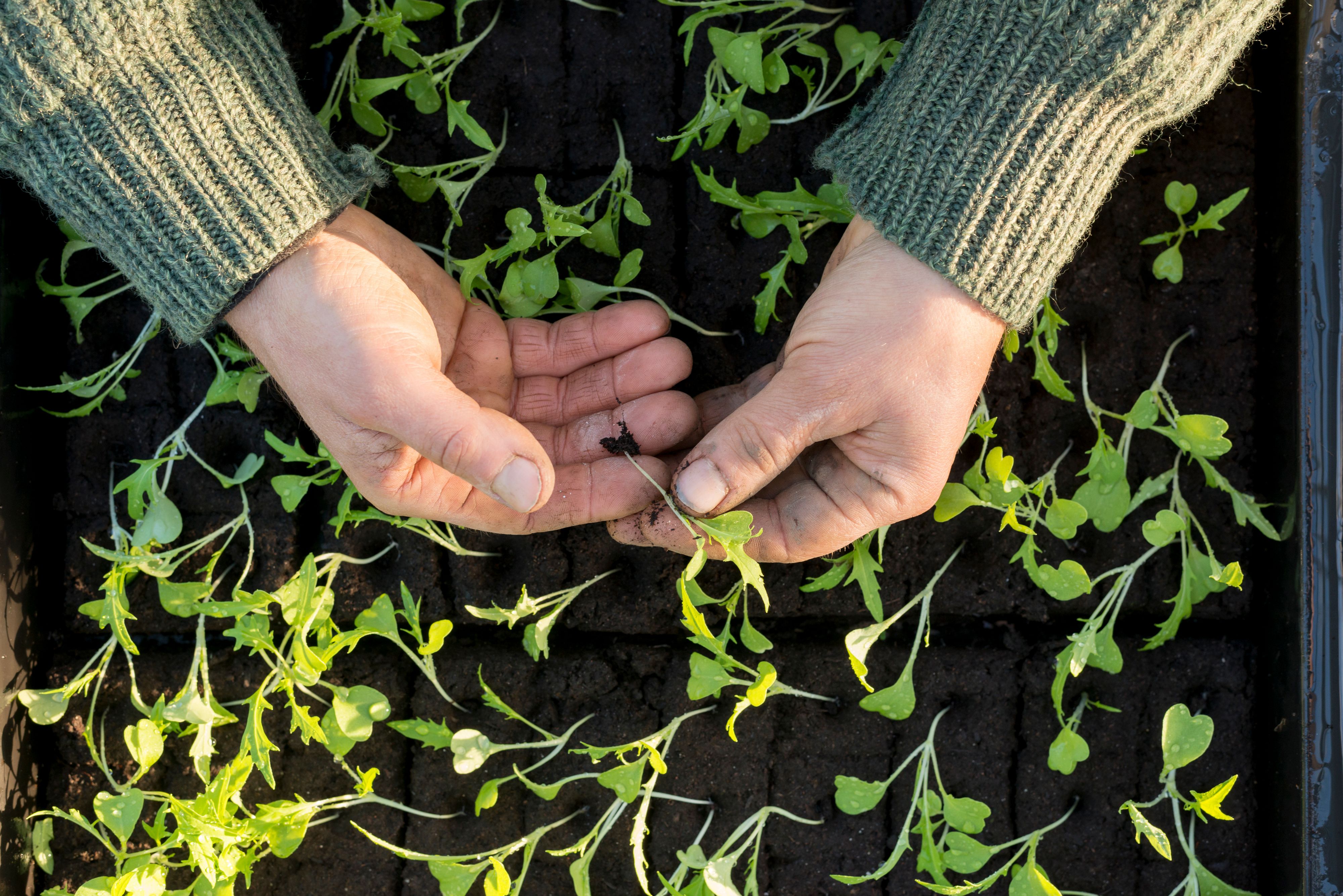
At Barcombe we are blessed, or cursed, depending on your outlook, with clay-heavy soil. It’s wonderful during a drought, but it means we don’t grow things like potatoes or parsnips, as they thrive in more free-draining earth. You might say greens are what we do best, and we painstakingly plan our sowing and planting so that we have a continuous supply. Leaves don’t travel well so we love being able to provide them consistently: quality and quantity is our aim! Our indoor plantings of chard and spinach last over the winter, and our early plantings of indoor kales are ready when our outdoor lot begin to bolt. This means there’s never an excuse not to eat your greens and it’s hardly a chore when they’re always so luscious looking, brimming with goodness and delivered to your door so soon after picking. The rest of our crops are best explored in terms of area.
Indoors
Our indoor space means we can also provide our unique mixed salad, one of our most popular items, throughout the year. You’ll notice the mix changes through the seasons, as we select different crops to account for changes in light levels, temperature and ‘pests’ (with flea beetles feasting in summer and slugs making themselves known in the wet, hey - if someone else ISN’T trying to eat your food, it begs the question what’s wrong with it?)
We return to beds to pick week after week as plants generously regrow and the salad bags
always include a balance of spicy, peppery, bitter and mild leaves as well as exciting textures, thanks to mustard frills, brassicas (like watercress and rocket) and a range of red and green lettuces, plus more unusual things like chicory, claytonia, pea shoots, bean tops, buckshorn plantain and agretti.
Other crops we grow indoors through the winter are Chinese cabbage and Asian greens like pak choi and tatsoi, which go into our stir-fry packs. Our parsley and coriander are also indispensable for enlivening meals during the darker months.
As the weather gets warmer we can offer fresh garlic, radishes and a new favourite, salad turnips. These lead onto spring onions, sugar snap peas and bunches of beetroot.
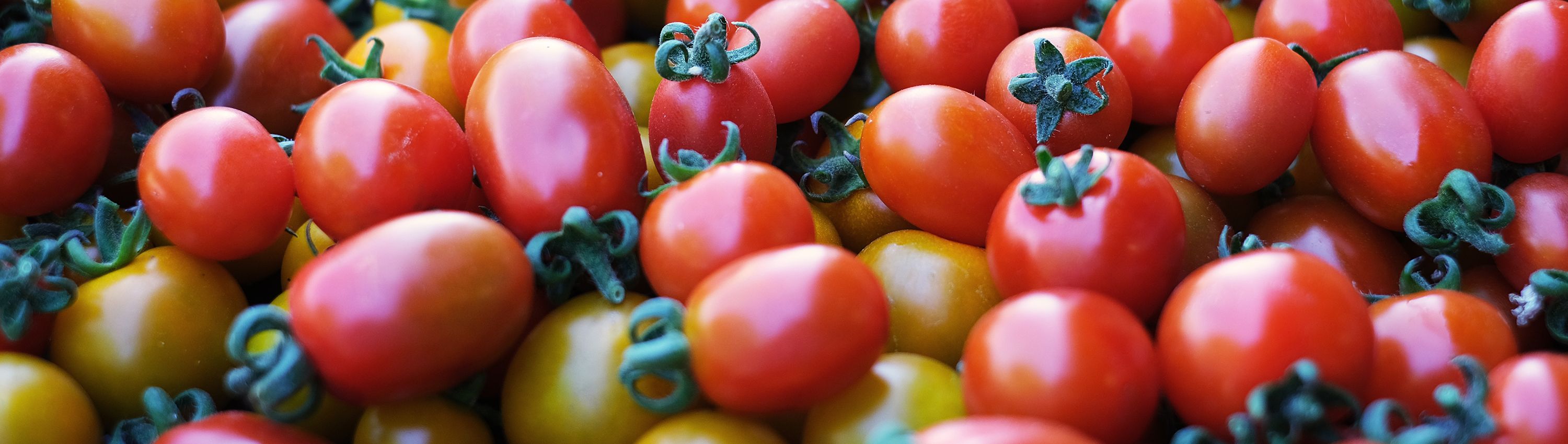
In high summer indoors we grow everyone’s favourites: tomatoes, aubergines, peppers and cucumbers, along with fennel and french beans. Some of these crops are very time consuming, requiring potting up, planting out (with nets, cages or individual strings), regular training and epic amounts of picking, but we’re sure you’ll agree they’re worth the effort and investment, as they really don’t compare to anything found in a supermarket. Summer is definitely a special time, when our boxes celebrate the abundance more sunshine brings and we’re keen to build on this, trialling vegetables that aren’t commonly produced in the UK, such as sweet potatoes and edamame, as well as increasing our offering of fruit from our peach and fig trees.
Summer is also the time when, as more crops can survive outside, our indoor beds are freed up to receive a boost through 'green manures’, crops we grow not to eat, but, like compost, to benefit the soil- more about them in a moment!
Outside
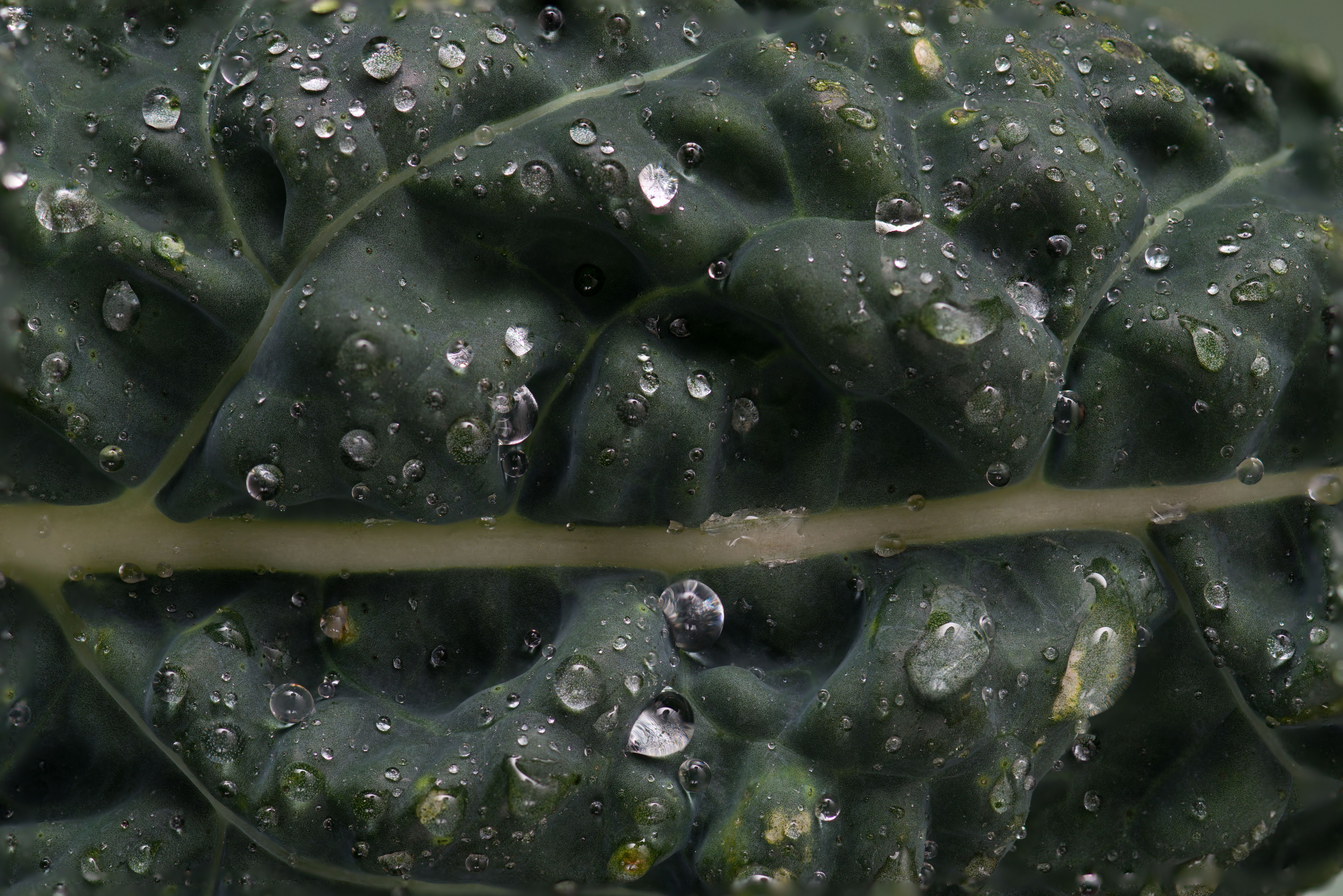
Further to kale, chard and spinach, other vegetables we grow outdoors, and which do incredibly well, are leeks and squash. We can fit thousands of leeks in one patch, maximising on space, and they happily stay in the ground over winter, meaning we can pull them up as we need them, eking them out into the ‘hungry gap’ (more about that soon, too!).
Our leeks aren’t as uniform as ones you’ll find in plastic packets but we think they’re much tastier and we don’t waste anything by excessively trimming them, so you know they’re super fresh and have more to cook with.
As to the squash, the varieties we grow have incredible depth of flavour, and are nothing like insipid, oversized, out of season butternuts. They are all an absolute joy to behold when we harvest them, by the ton, in autumn; they store well, curing over the winter and, with their endless versatility, always cheer us up.
We also grow broad beans, purple sprouting broccoli, sweetcorn and celeriac, all of which make seasonal eating a pleasure rather than a bore!
The real veg-enthusiasts among you might have noticed an absence of onions and cauliflowers in our repertoire, as well as potatoes and parsnips. In addition to our clay-heavy soil this is due to our size. We are not currently set up with the specific equipment or economies of scale to make these kinds of crops viable and so whilst we actively seek more land, we concentrate on crops that we get multiple harvests from, like cavolo nero, for example, which regrows, as opposed to cabbage, where you harvest the whole head once.
We’re very keen to increase the amount we can grow, and therefore the amount of our own produce we can put in our boxes; additional acreage would also take pressure off our existing plots. This would free up space to establish permanent ‘beetle banks’ (mid-field refuges for insects) as well as other crucial habitats for pollinators and larger wildlife. Agroforestry, which involves growing trees and crops together in a diverse system, would be another dream project to embark on.
Land cultivation
Whilst it is tempting to seize upon concepts such as ‘no dig’, ‘no till’ or ’no plough’ as simple solutions, the way these are presented can be confusing. For instance, ’no plough’ does not mean organic and often relies on increased usage of chemicals like glyphosate, which to us doesn’t seem like the answer. Similarly, whilst ‘no dig’ usually goes hand in hand with organic, it entails quantities of compost most places cannot produce themselves and therefore must buy in from elsewhere. This breaks the ‘closed loop’ system of true sustainability that we aim for. A ‘no dig’ approach is also incredibly difficult to apply beyond small-scale situations. With our leeks, for example, we would need an entire army to prepare the ground for planting manually.
Bearing all this in mind, we currently practise minimal cultivation and outside, we only plough during one part of our five year crop rotation.
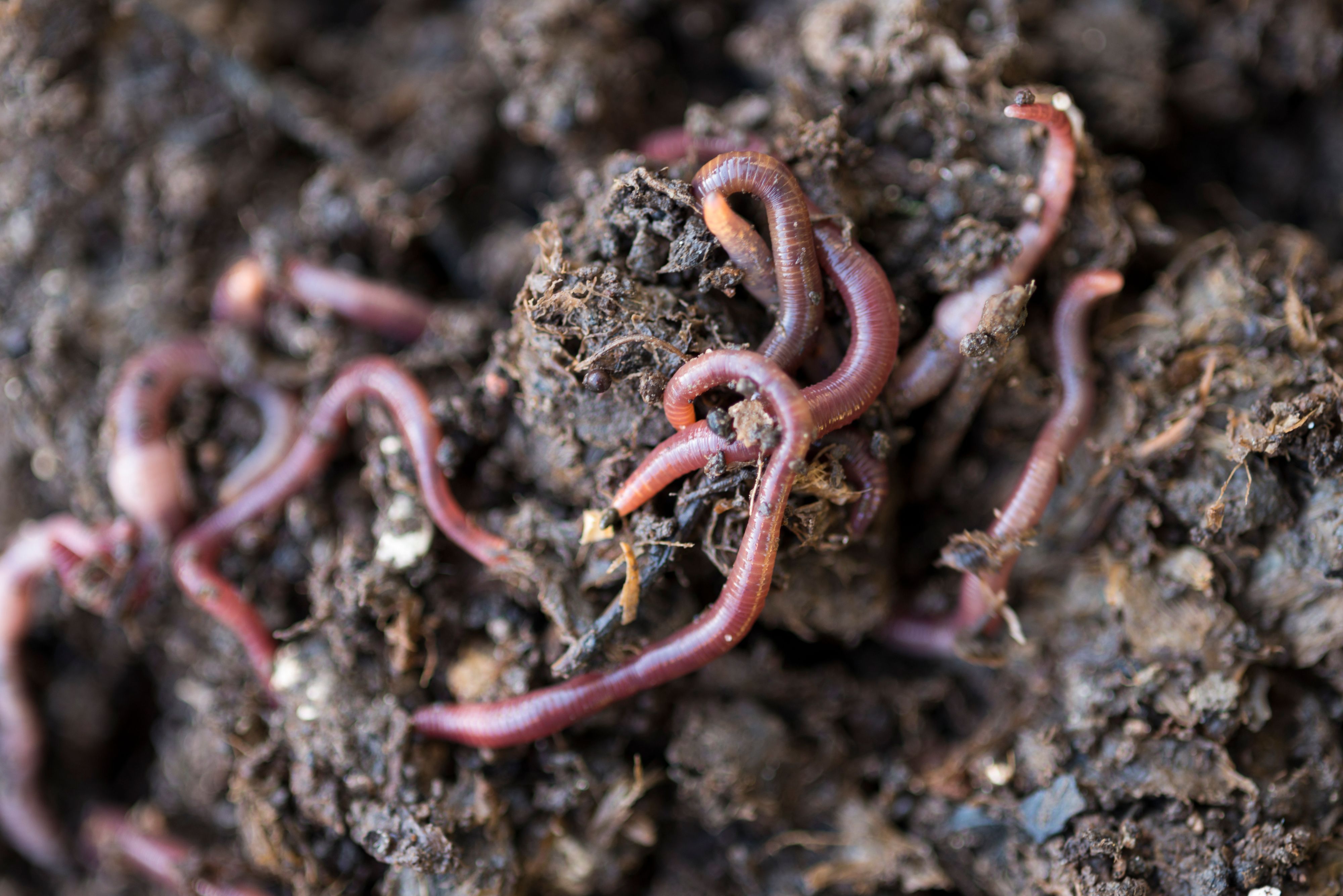
Our five year plan limits ‘pest’-damage, disease and nutrient deficiencies by alternating between different plants, which have different requirements and susceptibilities. ‘Green manures’ are an important part of the plan, with each plant in the mixes we sow serving a different function, for example, adding valuable nitrogen to feed beneficial organisms, covering the soil's surface to prevent erosion and nutrient loss or, through their roots, improving aeration, drainage and bringing up goodness from lower layers. These ‘green manures’ need breaking up and incorporating into the soil before we can plant again and whilst we are investigating ways of eliminating ploughing entirely by using mixes that disintegrate more easily, it is currently necessary. For the rest of the crop rotation though, we use a power harrow. This is normally used after a prior ploughing and is much less intensive, distributing compacted ground without touching the layers underneath.
In terms of indoor cultivation, we prepare beds manually whenever possible (bearing in mind we have two full-time growers and over eighty indoor beds!). Otherwise, we continue to trial and adapt machinery to have as little impact as possible.
Overall, we don’t claim this approach is perfect and there is plenty of room for improvement but we are determined to do our best and embrace new research and technology as it emerges.
As with all our methodology, we welcome conversations and suggestions, avoiding polarisation or dogmatism as we all play our part in what we hope is industry-wide, ecologically-minded agricultural progress. We want to bring our customers along with us as we learn and develop.


© 2026 - Barcombe Nurseries
Powered by
